UI / UX Design
Veepee Design System: From Fragmentation to Foundation
Merging fragmented systems into a single, scalable design foundation used across teams.
Year
2024
Industry
E-commerce/Tech
Client
Veepee
Role
Design System Lead
0+
0+
teams aligned around a unified design system and shared component structure
0%
0%
fewer design–dev clarification loops, thanks to semantic tokens and clearer documentation
0x
0x
faster prototyping cycles, enabled by reusable components and AI-assisted documentation
0+
0+
teams aligned around a unified design system and shared component structure
0%
0%
fewer design–dev clarification loops, thanks to semantic tokens and clearer documentation
0x
0x
faster prototyping cycles, enabled by reusable components and AI-assisted documentation
0+
0+
teams aligned around a unified design system and shared component structure
0%
0%
fewer design–dev clarification loops, thanks to semantic tokens and clearer documentation
0x
0x
faster prototyping cycles, enabled by reusable components and AI-assisted documentation
Problem
Veepee operates a large-scale e-commerce ecosystem with multiple product teams working across internal tools and customer-facing platforms. When I joined as a Product Designer, I quickly identified a structural issue: design was fragmented across two separate systems—one powering internal tools, the other used for customer experiences.
This separation created inconsistencies, duplication, and friction between teams. Rather than treating it as a local design issue, I approached it as an organizational problem: the foundation itself needed to be rethought.
The design system setup was actively slowing teams down:
Duplicate and inconsistent components across teams
No shared language between design and engineering
System owned by one person, limiting adoption
Low clarity, slow onboarding, and fragmented UX
This wasn’t just a design quality issue—it was a scalability problem affecting the entire product organization.
Solution
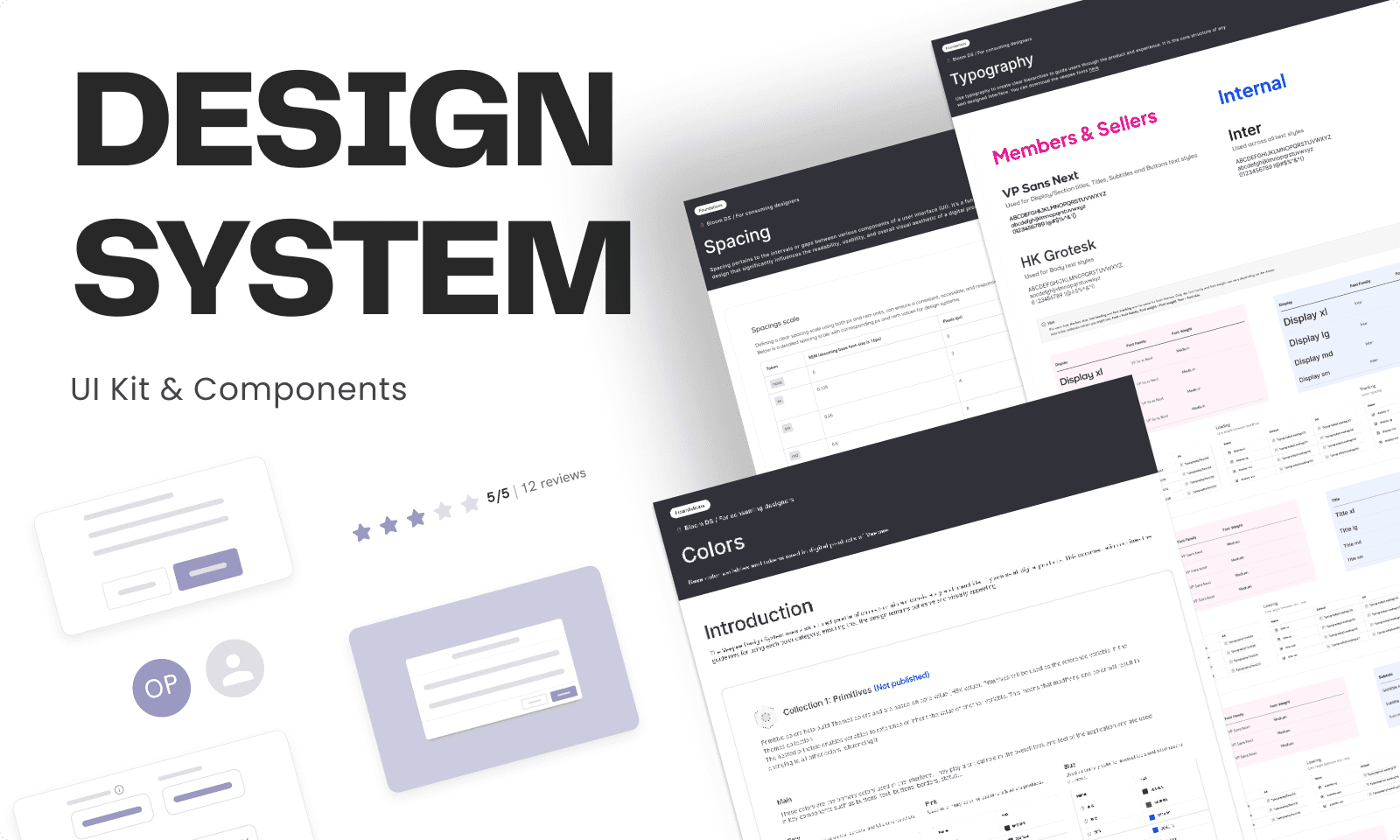
I led the audit and vision, then formed a Core Design System team with two designers. We worked cross-functionally with engineers and the wider UX team to drive adoption. The goal was not to “fix components” but to build a system teams would actually use.
Consolidated components into a unified, scalable library
Introduced semantic tokens to align with engineering
Built contribution and governance workflows to move to a community-driven system
Drove adoption through workshops, documentation, and direct collaboration
Used AI to streamline and maintain documentation
Challenge
The main challenge was:
Aligning multiple teams without forcing adoption
Balancing standardization with flexibility
Reframing the system from constraint to enabler
Summary
The design system became a core part of Veepee’s product infrastructure:
Stronger alignment between design and engineering
Significant reduction in duplicated components
Clear, usable documentation with defined usage logic
Faster onboarding for designers and developers
Improved consistency across all product surfaces
Increased delivery speed due to reduced rework
More importantly, the system shifted from being a static library to a shared foundation owned by the organization.
This work stands out by solving the real issue—organizational alignment—not just UI consistency
Design systems are not just UI kits—they are operational tools. When the foundation is clear, teams move faster, decisions improve, and consistency becomes a byproduct rather than a constraint.
UI / UX Design
Veepee Design System: From Fragmentation to Foundation
Merging fragmented systems into a single, scalable design foundation used across teams.
Year
2024
Industry
E-commerce/Tech
Client
Veepee
Role
Design System Lead
0+
0+
teams aligned around a unified design system and shared component structure
0%
0%
fewer design–dev clarification loops, thanks to semantic tokens and clearer documentation
0x
0x
faster prototyping cycles, enabled by reusable components and AI-assisted documentation
0+
0+
teams aligned around a unified design system and shared component structure
0%
0%
fewer design–dev clarification loops, thanks to semantic tokens and clearer documentation
0x
0x
faster prototyping cycles, enabled by reusable components and AI-assisted documentation
0+
0+
teams aligned around a unified design system and shared component structure
0%
0%
fewer design–dev clarification loops, thanks to semantic tokens and clearer documentation
0x
0x
faster prototyping cycles, enabled by reusable components and AI-assisted documentation
Problem
Veepee operates a large-scale e-commerce ecosystem with multiple product teams working across internal tools and customer-facing platforms. When I joined as a Product Designer, I quickly identified a structural issue: design was fragmented across two separate systems—one powering internal tools, the other used for customer experiences.
This separation created inconsistencies, duplication, and friction between teams. Rather than treating it as a local design issue, I approached it as an organizational problem: the foundation itself needed to be rethought.
The design system setup was actively slowing teams down:
Duplicate and inconsistent components across teams
No shared language between design and engineering
System owned by one person, limiting adoption
Low clarity, slow onboarding, and fragmented UX
This wasn’t just a design quality issue—it was a scalability problem affecting the entire product organization.
Solution
I led the audit and vision, then formed a Core Design System team with two designers. We worked cross-functionally with engineers and the wider UX team to drive adoption. The goal was not to “fix components” but to build a system teams would actually use.
Consolidated components into a unified, scalable library
Introduced semantic tokens to align with engineering
Built contribution and governance workflows to move to a community-driven system
Drove adoption through workshops, documentation, and direct collaboration
Used AI to streamline and maintain documentation
Challenge
The main challenge was:
Aligning multiple teams without forcing adoption
Balancing standardization with flexibility
Reframing the system from constraint to enabler
Summary
The design system became a core part of Veepee’s product infrastructure:
Stronger alignment between design and engineering
Significant reduction in duplicated components
Clear, usable documentation with defined usage logic
Faster onboarding for designers and developers
Improved consistency across all product surfaces
Increased delivery speed due to reduced rework
More importantly, the system shifted from being a static library to a shared foundation owned by the organization.
This work stands out by solving the real issue—organizational alignment—not just UI consistency
Design systems are not just UI kits—they are operational tools. When the foundation is clear, teams move faster, decisions improve, and consistency becomes a byproduct rather than a constraint.
UI / UX Design
Veepee Design System: From Fragmentation to Foundation
Merging fragmented systems into a single, scalable design foundation used across teams.
Year
2024
Industry
E-commerce/Tech
Client
Veepee
Role
Design System Lead
0+
0+
teams aligned around a unified design system and shared component structure
0%
0%
fewer design–dev clarification loops, thanks to semantic tokens and clearer documentation
0x
0x
faster prototyping cycles, enabled by reusable components and AI-assisted documentation
0+
0+
teams aligned around a unified design system and shared component structure
0%
0%
fewer design–dev clarification loops, thanks to semantic tokens and clearer documentation
0x
0x
faster prototyping cycles, enabled by reusable components and AI-assisted documentation
0+
0+
teams aligned around a unified design system and shared component structure
0%
0%
fewer design–dev clarification loops, thanks to semantic tokens and clearer documentation
0x
0x
faster prototyping cycles, enabled by reusable components and AI-assisted documentation
Problem
Veepee operates a large-scale e-commerce ecosystem with multiple product teams working across internal tools and customer-facing platforms. When I joined as a Product Designer, I quickly identified a structural issue: design was fragmented across two separate systems—one powering internal tools, the other used for customer experiences.
This separation created inconsistencies, duplication, and friction between teams. Rather than treating it as a local design issue, I approached it as an organizational problem: the foundation itself needed to be rethought.
The design system setup was actively slowing teams down:
Duplicate and inconsistent components across teams
No shared language between design and engineering
System owned by one person, limiting adoption
Low clarity, slow onboarding, and fragmented UX
This wasn’t just a design quality issue—it was a scalability problem affecting the entire product organization.
Solution
I led the audit and vision, then formed a Core Design System team with two designers. We worked cross-functionally with engineers and the wider UX team to drive adoption. The goal was not to “fix components” but to build a system teams would actually use.
Consolidated components into a unified, scalable library
Introduced semantic tokens to align with engineering
Built contribution and governance workflows to move to a community-driven system
Drove adoption through workshops, documentation, and direct collaboration
Used AI to streamline and maintain documentation
Challenge
The main challenge was:
Aligning multiple teams without forcing adoption
Balancing standardization with flexibility
Reframing the system from constraint to enabler
Summary
The design system became a core part of Veepee’s product infrastructure:
Stronger alignment between design and engineering
Significant reduction in duplicated components
Clear, usable documentation with defined usage logic
Faster onboarding for designers and developers
Improved consistency across all product surfaces
Increased delivery speed due to reduced rework
More importantly, the system shifted from being a static library to a shared foundation owned by the organization.
This work stands out by solving the real issue—organizational alignment—not just UI consistency
Design systems are not just UI kits—they are operational tools. When the foundation is clear, teams move faster, decisions improve, and consistency becomes a byproduct rather than a constraint.