UI / UX Design
MyBroker: Reframing the Digital Client Space
Redesigning a broker–client platform to simplify insurance management and enable seamless digital interactions.
Year
2020
Industry
Insurance/Fintech
Client
Portima
Role
Product Designer
0%
0%
increased field productivity, allowing brokers to manage and update files directly on the go
0%
0%
reduction in task friction thanks to simplified mobile flows for updates and actions
0x
0x
faster access to client data: key information surfaced
0%
0%
increased field productivity, allowing brokers to manage and update files directly on the go
0%
0%
reduction in task friction thanks to simplified mobile flows for updates and actions
0x
0x
faster access to client data: key information surfaced
0%
0%
increased field productivity, allowing brokers to manage and update files directly on the go
0%
0%
reduction in task friction thanks to simplified mobile flows for updates and actions
0x
0x
faster access to client data: key information surfaced
Problem
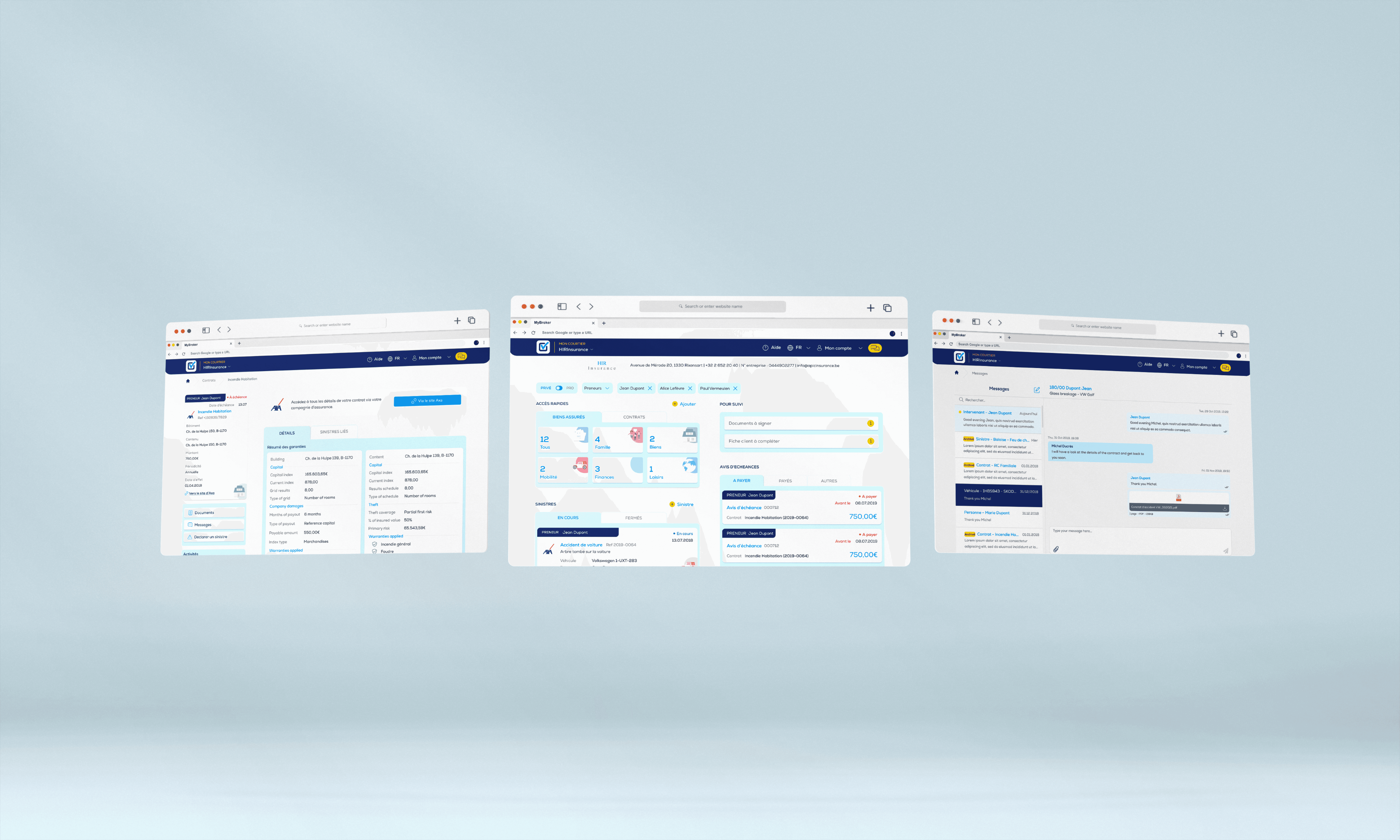
Portima provides digital tools for insurance brokers in Belgium, helping them stay relevant in an increasingly digital landscape. MyBroker is the client-facing platform brokers offer to their customers.
The product existed but lacked clarity and usability. The objective was to rethink the experience end-to-end so brokers could deliver a reliable, always-available service to their clients.
The interface relied on fragmented user journeys across contracts, claims, and documents
Poor visibility on insurance coverage and status
Complex flows for key actions like reporting a claim or signing documents
Low perceived value for end users, limiting adoption
The platform failed at a critical level: it didn’t reflect the broker’s role as a trusted advisor.
Solution
I was responsible for redesigning the core experience:
Reworked user flows and information architecture
Designed key interfaces and interaction patterns
Collaborated with product and engineering teams
Ownership focused on making the product usable, not just visually improved.
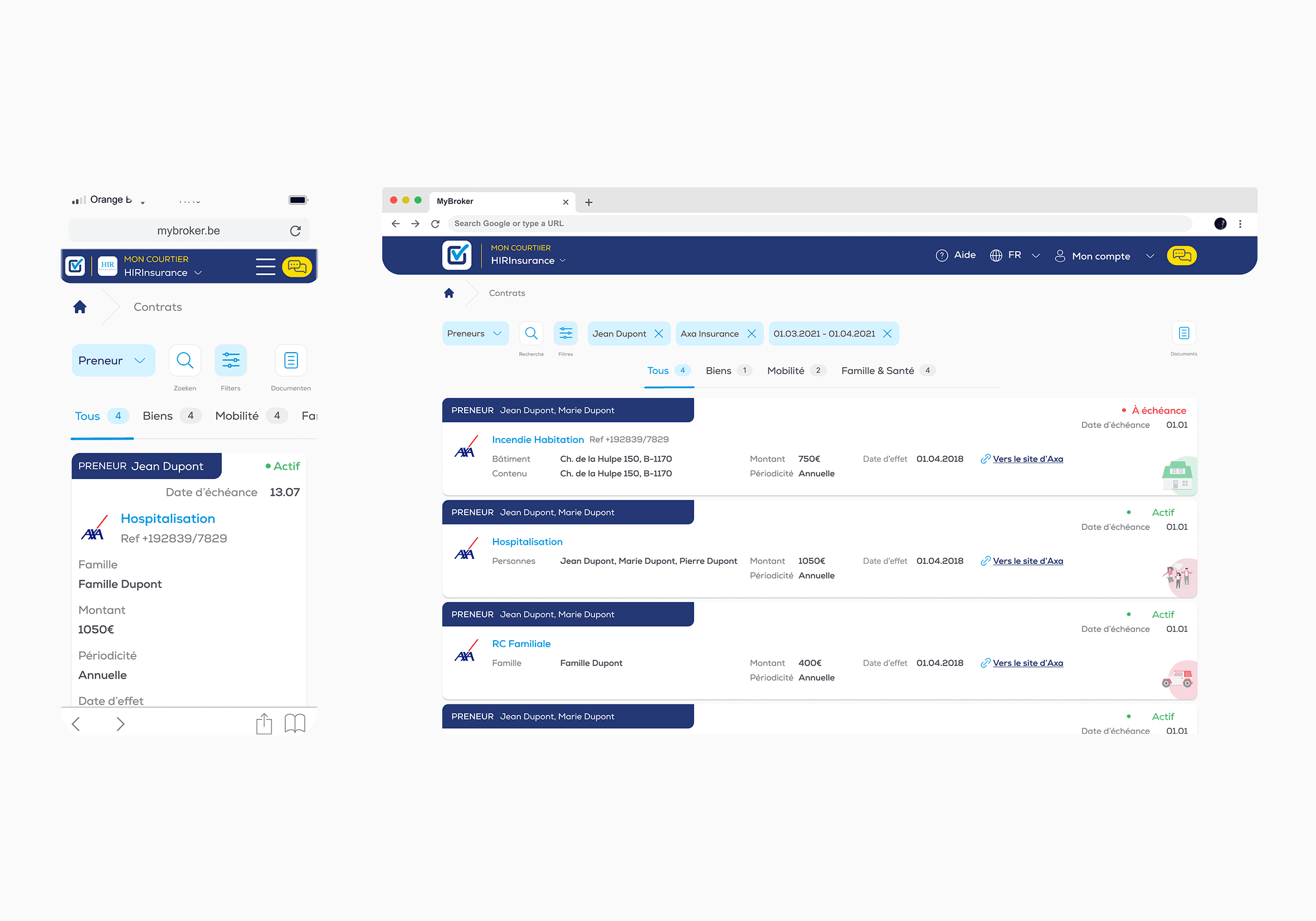
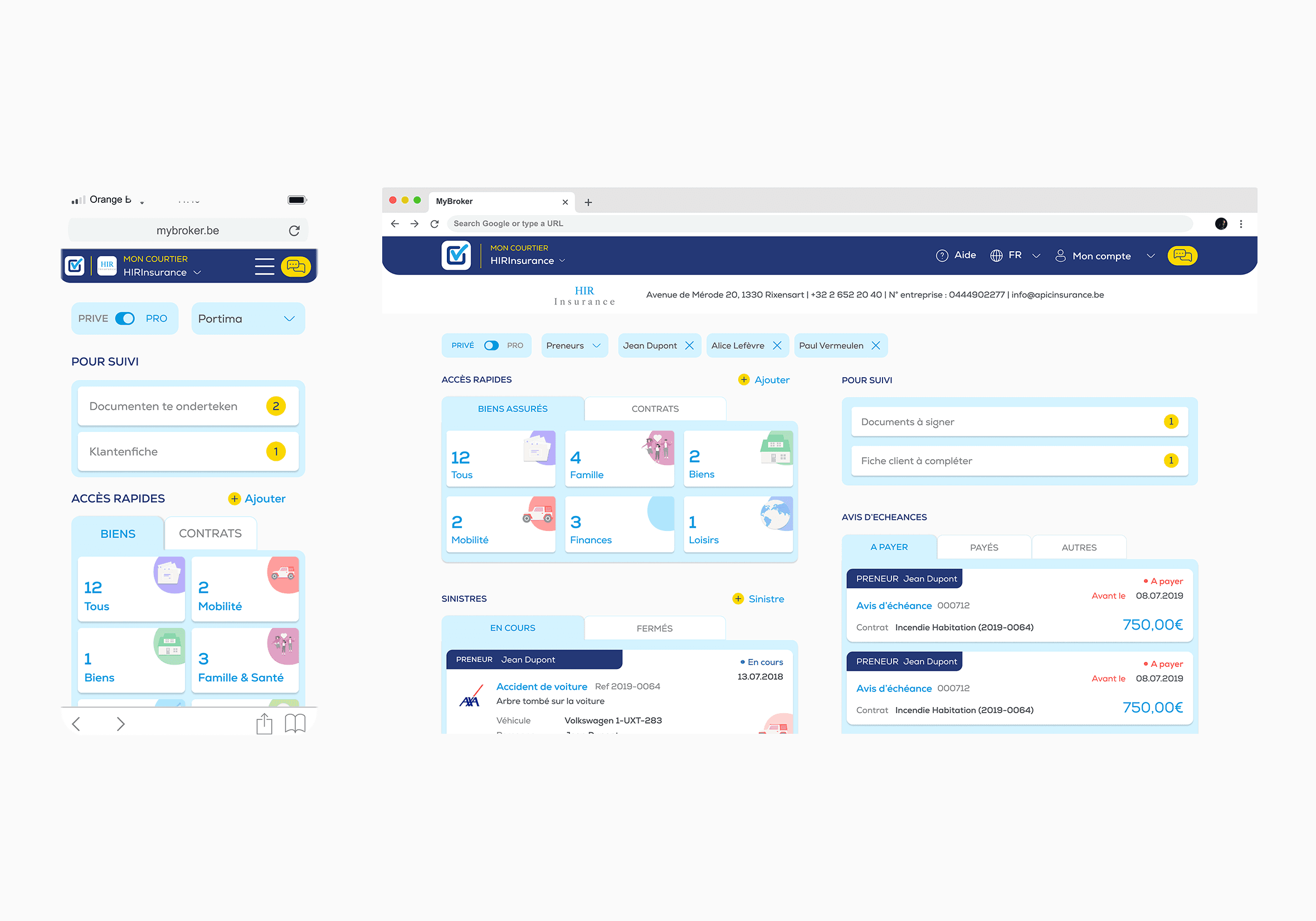
The idea was to simplify the overall structure to give users a clear overview of their contracts and files
Designed streamlined flows for high-frequency actions like claims and document signing
Introduced a more intuitive navigation model aligned with user mental models
Focused on clarity, reducing friction at every step rather than adding features
The approach prioritized usability and trust—two elements often missing in insurance products.
Challenge
The main challenges were the following:
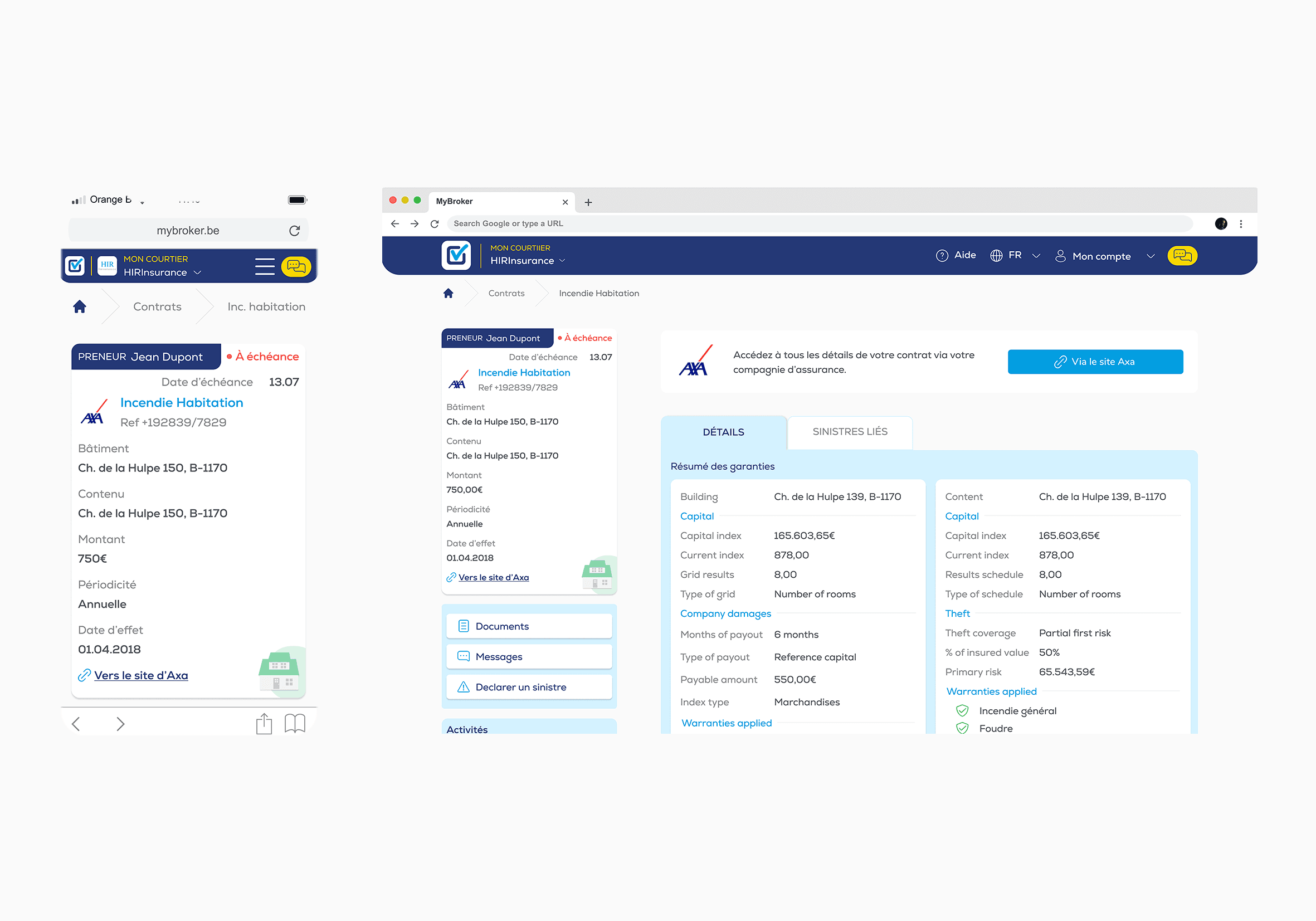
Balancing complex insurance data with a simple interface
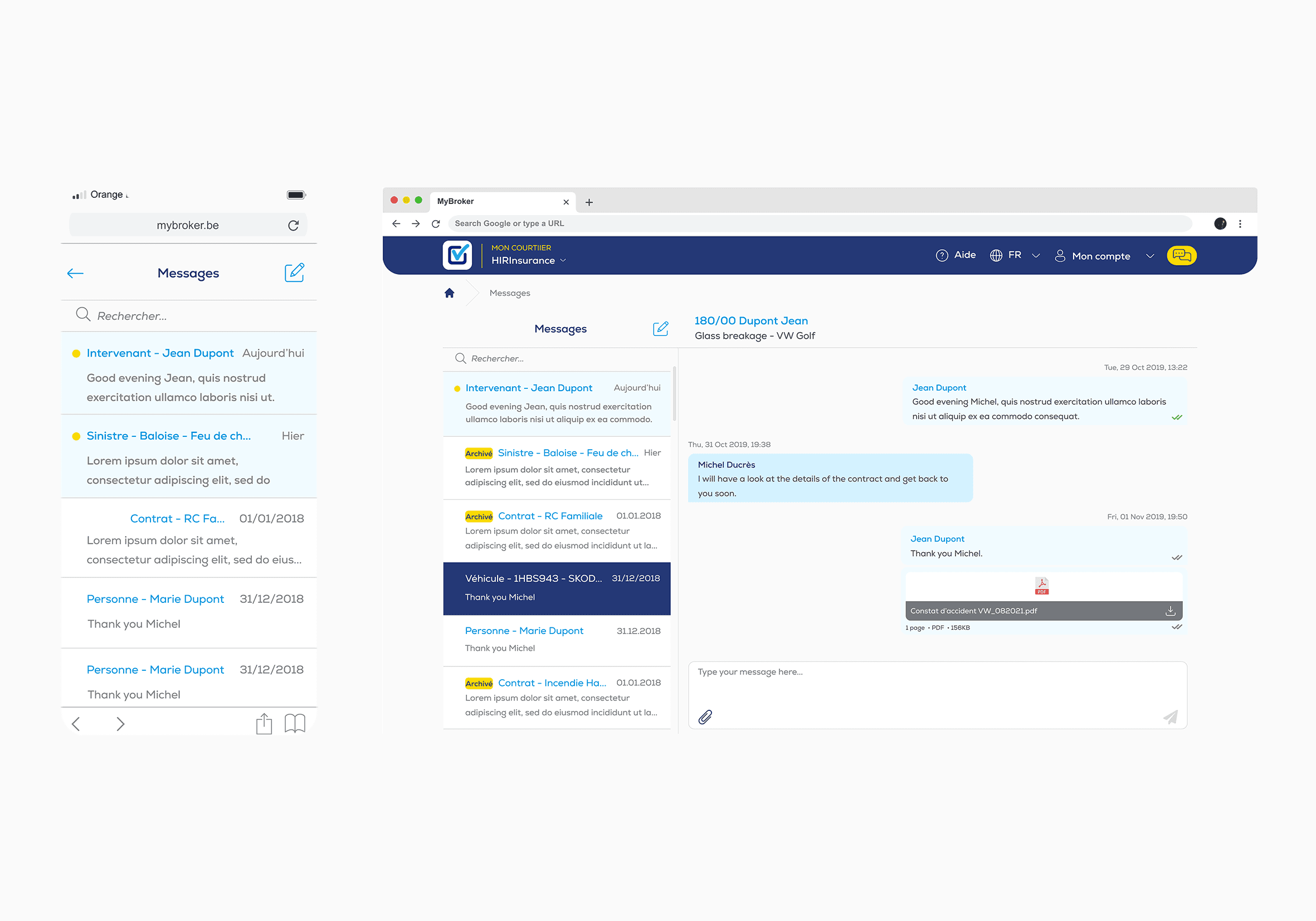
Designing for both brokers and end clients with different expectations
Improving usability without overcomplicating the product
Each decision focused on reducing cognitive load while preserving essential information.
Summary
Clearer structure and improved navigation across the platform
Faster, more intuitive key flows (claims, document signing)
Stronger alignment with user expectations
Increased perceived value of the client space
This work stands out by addressing the core issue: usability over feature accumulation. Instead of adding complexity, the redesign made the product understandable, which is what drives real adoption in this space.
UI / UX Design
MyBroker: Reframing the Digital Client Space
Redesigning a broker–client platform to simplify insurance management and enable seamless digital interactions.
Year
2020
Industry
Insurance/Fintech
Client
Portima
Role
Product Designer
0%
0%
increased field productivity, allowing brokers to manage and update files directly on the go
0%
0%
reduction in task friction thanks to simplified mobile flows for updates and actions
0x
0x
faster access to client data: key information surfaced
0%
0%
increased field productivity, allowing brokers to manage and update files directly on the go
0%
0%
reduction in task friction thanks to simplified mobile flows for updates and actions
0x
0x
faster access to client data: key information surfaced
0%
0%
increased field productivity, allowing brokers to manage and update files directly on the go
0%
0%
reduction in task friction thanks to simplified mobile flows for updates and actions
0x
0x
faster access to client data: key information surfaced
Problem
Portima provides digital tools for insurance brokers in Belgium, helping them stay relevant in an increasingly digital landscape. MyBroker is the client-facing platform brokers offer to their customers.
The product existed but lacked clarity and usability. The objective was to rethink the experience end-to-end so brokers could deliver a reliable, always-available service to their clients.
The interface relied on fragmented user journeys across contracts, claims, and documents
Poor visibility on insurance coverage and status
Complex flows for key actions like reporting a claim or signing documents
Low perceived value for end users, limiting adoption
The platform failed at a critical level: it didn’t reflect the broker’s role as a trusted advisor.
Solution
I was responsible for redesigning the core experience:
Reworked user flows and information architecture
Designed key interfaces and interaction patterns
Collaborated with product and engineering teams
Ownership focused on making the product usable, not just visually improved.
The idea was to simplify the overall structure to give users a clear overview of their contracts and files
Designed streamlined flows for high-frequency actions like claims and document signing
Introduced a more intuitive navigation model aligned with user mental models
Focused on clarity, reducing friction at every step rather than adding features
The approach prioritized usability and trust—two elements often missing in insurance products.
Challenge
The main challenges were the following:
Balancing complex insurance data with a simple interface
Designing for both brokers and end clients with different expectations
Improving usability without overcomplicating the product
Each decision focused on reducing cognitive load while preserving essential information.
Summary
Clearer structure and improved navigation across the platform
Faster, more intuitive key flows (claims, document signing)
Stronger alignment with user expectations
Increased perceived value of the client space
This work stands out by addressing the core issue: usability over feature accumulation. Instead of adding complexity, the redesign made the product understandable, which is what drives real adoption in this space.
UI / UX Design
MyBroker: Reframing the Digital Client Space
Redesigning a broker–client platform to simplify insurance management and enable seamless digital interactions.
Year
2020
Industry
Insurance/Fintech
Client
Portima
Role
Product Designer
0%
0%
increased field productivity, allowing brokers to manage and update files directly on the go
0%
0%
reduction in task friction thanks to simplified mobile flows for updates and actions
0x
0x
faster access to client data: key information surfaced
0%
0%
increased field productivity, allowing brokers to manage and update files directly on the go
0%
0%
reduction in task friction thanks to simplified mobile flows for updates and actions
0x
0x
faster access to client data: key information surfaced
0%
0%
increased field productivity, allowing brokers to manage and update files directly on the go
0%
0%
reduction in task friction thanks to simplified mobile flows for updates and actions
0x
0x
faster access to client data: key information surfaced
Problem
Portima provides digital tools for insurance brokers in Belgium, helping them stay relevant in an increasingly digital landscape. MyBroker is the client-facing platform brokers offer to their customers.
The product existed but lacked clarity and usability. The objective was to rethink the experience end-to-end so brokers could deliver a reliable, always-available service to their clients.
The interface relied on fragmented user journeys across contracts, claims, and documents
Poor visibility on insurance coverage and status
Complex flows for key actions like reporting a claim or signing documents
Low perceived value for end users, limiting adoption
The platform failed at a critical level: it didn’t reflect the broker’s role as a trusted advisor.
Solution
I was responsible for redesigning the core experience:
Reworked user flows and information architecture
Designed key interfaces and interaction patterns
Collaborated with product and engineering teams
Ownership focused on making the product usable, not just visually improved.
The idea was to simplify the overall structure to give users a clear overview of their contracts and files
Designed streamlined flows for high-frequency actions like claims and document signing
Introduced a more intuitive navigation model aligned with user mental models
Focused on clarity, reducing friction at every step rather than adding features
The approach prioritized usability and trust—two elements often missing in insurance products.
Challenge
The main challenges were the following:
Balancing complex insurance data with a simple interface
Designing for both brokers and end clients with different expectations
Improving usability without overcomplicating the product
Each decision focused on reducing cognitive load while preserving essential information.
Summary
Clearer structure and improved navigation across the platform
Faster, more intuitive key flows (claims, document signing)
Stronger alignment with user expectations
Increased perceived value of the client space
This work stands out by addressing the core issue: usability over feature accumulation. Instead of adding complexity, the redesign made the product understandable, which is what drives real adoption in this space.